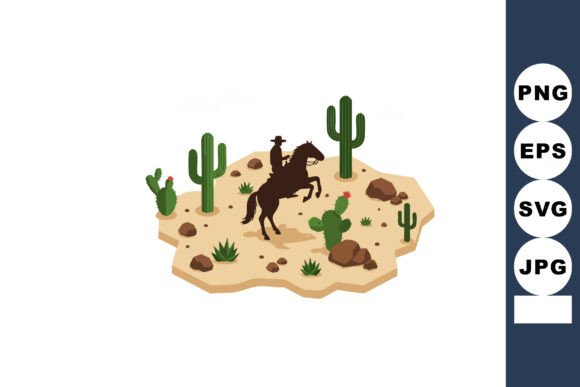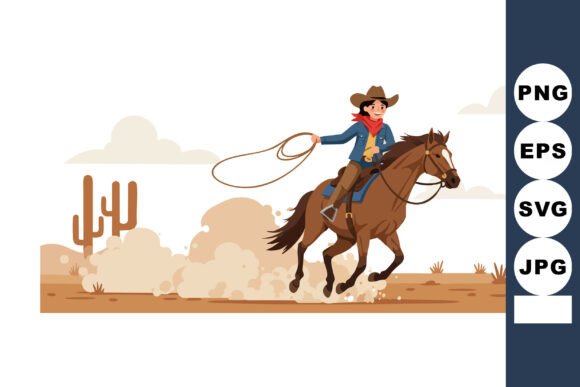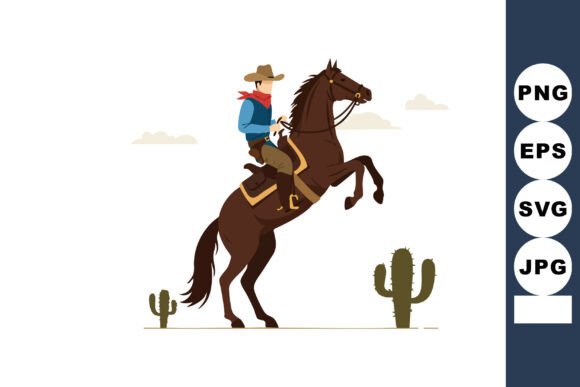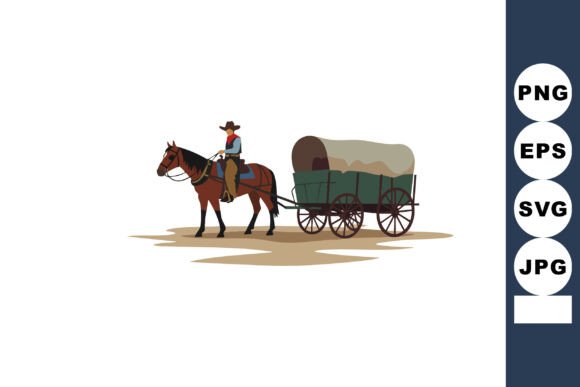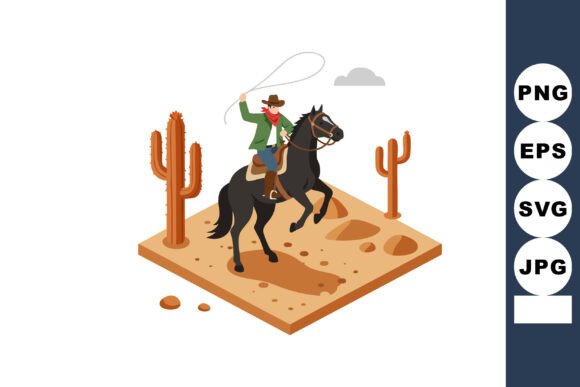
Cowboy Riding Black Horse in Desert Land
When I pull a new design file into my hoop, I am not just looking at shapes; I am visualizing the finished product. Will it sit well on a customer’s chest? Will the details hold up after twenty washes? Is this going to look like a mass-produced sticker or a thoughtful handmade piece? That is the mindset I bring to every review, and today I am putting Cowboy Riding Black Horse in Desert Land through that same rigorous mental test.
This graphic falls under the category of Illustrations and Graphics, but for us embroiderers, it is about translation. How does a digital image become thread? The description paints a vivid picture: a cowboy on a black horse, set against a desert landscape with cacti, rocks, and a cloudy sky. It promises a dynamic western scene with an adventurous mood. From a designer’s perspective, that is a tall order. Western themes can easily become cluttered or cartoonish if the layout isn’t handled with care. So, let’s break down whether this design actually works for real-world projects.
The First Impression: Mood and Composition
The immediate appeal of Cowboy Riding Black Horse in Desert Land lies in its narrative potential. It isn’t just a static icon; it is a moment frozen in time. The combination of the black horse against what sounds like a lighter, cloudy sky creates natural contrast, which is music to an embroiderer’s ears. Dark threads pop beautifully on mid-tone fabrics, and the silhouette of a horse and rider is generally forgiving even if some fine detail gets lost in the stitching process.
However, the inclusion of cacti and rocks adds complexity. In embroidery, background elements can sometimes distract from the main subject. If these elements are too dense, they might compete with the cowboy for attention. My initial assessment is that this design works best when the focus remains on the figure. The "adventurous mood" suggests movement, which means the stitch direction will likely need to follow the contours of the horse’s muscles and the rider’s posture to feel alive rather than flat.
Real-World Application: Where This Design Shines
I have spent years evaluating designs for small business owners, Etsy sellers, and craft fair vendors. Here is where I see Cowboy Riding Black Horse in Desert Land performing exceptionally well in actual production environments.
- Custom Apparel: This is a heavyweight winner for sweatshirt embroidery. The western theme pairs perfectly with rugged fabrics like fleece or heavy cotton blends. Placing this on the back of a hoodie or centered on the chest of a flannel shirt gives it that authentic, artisanal feel that customers love.
- Tote Bag Design: Canvas tote bags are a staple for craft businesses. A large-scale version of this graphic would look stunning on a durable canvas tote. The adventure theme resonates with people who value outdoor activities, making it a great upsell item.
- Embroidered Patch: Because the scene has defined edges (the horse, the horizon), it translates naturally into an embroidered patch. These are high-margin items for small shop products. You could sell them as standalone accessories or attach them to denim jackets and backpacks.
- Holiday Embarrassment and Gifts: While not a traditional holiday motif, western themes are perennial favorites for specific demographics. This makes an excellent personalized gift for someone moving to a rural area, retiring from a tough job, or simply loving the outdoors. It feels personal and meaningful.
- Kitchen and Home Decor: Do not overlook tea towels and aprons. For a boutique branding angle, a smaller, simplified version of this graphic on a flour sack towel adds a touch of rustic charm to a kitchen setting.
Technical Considerations and Potential Pitfalls
As an experienced reviewer, I must be honest about where this design might struggle. Not every file is created equal, and without seeing the actual digitization, we have to assume standard practices while advising caution.
Small Hoop Sizes: If you attempt to stitch this entire scene—including the cacti, rocks, and sky—in a 4x4 inch hoop, you will lose definition. The details will turn into a muddy blob. This design requires a larger hoop size to breathe. If you are working with limited equipment, you may need to crop the design significantly, focusing only on the horse and rider.
Fabric Texture and Stretch: Embroidering on stretchy fabrics like thin jersey or loose-weave knits can distort the intricate lines of a horse’s mane or the folds of a cowboy’s hat. Always use a proper stabilizer, preferably a cut-away for heavier garments like sweatshirts, to prevent puckering. On textured fabrics like burlap or heavy linen, the needle might skip stitches, so a tear-away stabilizer underneath is non-negotiable.
Dense Stitch Areas: The description mentions a cloudy sky. If this is rendered with dense fill stitch, it can make the fabric stiff and uncomfortable. For apparel, especially baby clothes or lightweight t-shirts, excessive density is a dealbreaker. Test this on scrap fabric first to ensure the hand-feel remains soft enough for the intended use.
Color and Contrast Strategy
The success of Cowboy Riding Black Horse in Desert Land hinges on thread colors. A black horse on a dark navy or black shirt will disappear unless you use a contrasting outline or applique technique. Conversely, on a light cream or white fabric, the black horse will stand out sharply. I recommend using a satin stitch for the outlines to define the shapes clearly, especially if the original illustration has fine lines. Running stitch can be used for texture in the horse’s coat or the rider’s clothing to add depth without adding bulk.
Practical Designer Notes for Success
Before you start producing merchandise, follow these steps to ensure quality and avoid costly mistakes.
- Test on Scrap Fabric: Never go straight to your final product. Stitch the design on the exact fabric type you plan to sell. Check how the thread interacts with the weave.
- Review Stitch Density: Look closely at the digital preview. Are there areas where the stitches are too close together? This can cause thread breaks or machine jams.
- Check Small Details: Zoom in on the cacti and rocks. Are they legible at the size you intend to produce? If not, simplify the design digitally before stitching.
- Black and White Mockups: Convert the design to grayscale to check contrast. If the values blend together, your thread color choices need adjustment.
- Confirm Licensing: Since this is a downloadable ZIP including SVG, EPS, JPG, and PNG files, verify the commercial license terms. Some illustrations allow for unlimited finished product sales, while others restrict the number of items. As a digital product seller or Etsy seller, protecting your business is paramount.
Final Verdict
Cowboy Riding Black Horse in Desert Land is a strong candidate for any designer looking to expand their western or adventure-themed collections. It offers a dynamic visual that appeals to a broad audience, from hobbyists making personalized gifts to professional decorators creating custom apparel. Its strength lies in its bold subject matter, but its success depends entirely on execution—specifically, hoop size selection, fabric choice, and stitch quality.
If you treat it with the respect due a complex illustration, this design will elevate your handmade products. It moves beyond simple clipart and offers a storytelling element that customers connect with. For those selling digital embroidery files or physical goods, this asset provides good versatility, provided you guide your customers on proper stabilization and fabric pairing. It is a solid addition to your design assets library, ready to ride into your next successful project.