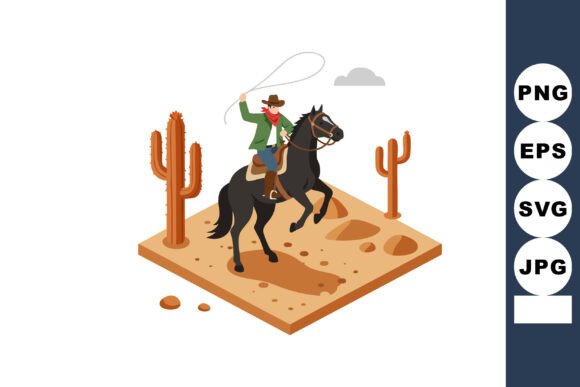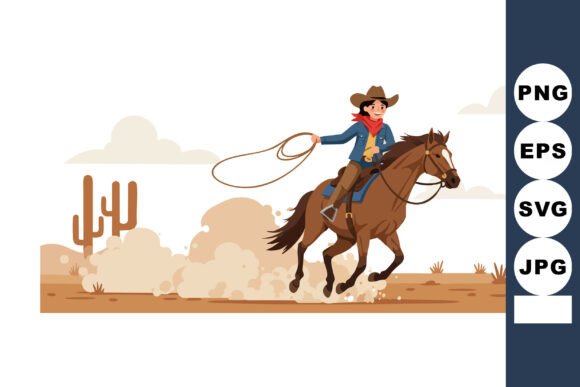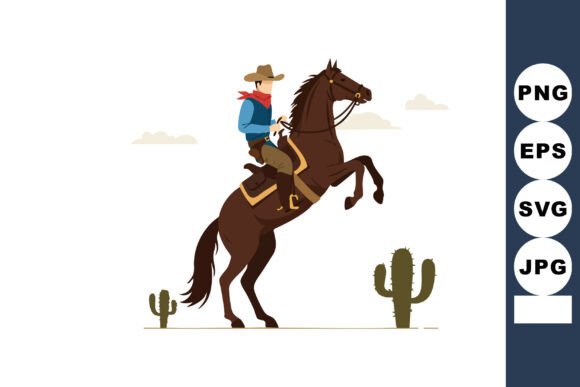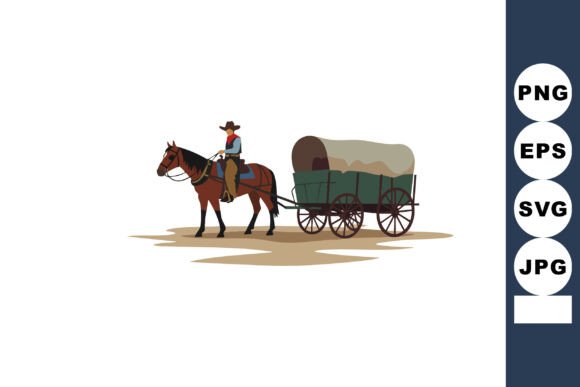
Cowboy Riding Horse in Desert Landscape
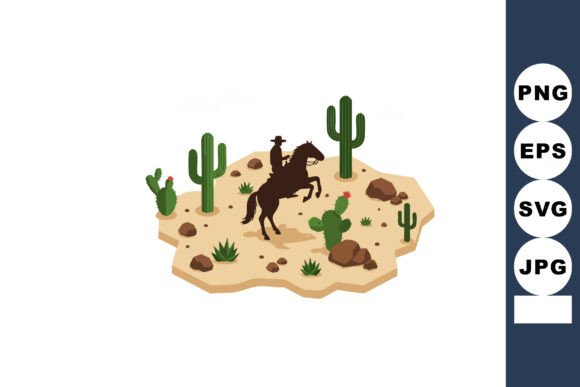
When I sit down to evaluate a new embroidery file, I am rarely looking for just another pretty picture. As a designer who regularly prepares assets for client projects and my own small shop, I need to know if a design will translate from a screen into thread without losing its soul. Today, I am reviewing the Cowboy Riding Horse in Desert Landscape illustration. It is categorized under Illustrations and Graphics, but in the world of machine embroidery, those categories matter less than how the design behaves on fabric. This piece features a cowboy on horseback set against a desert backdrop with cacti and scattered rocks, evoking a rugged western atmosphere with a surprisingly calm mood.
My first impression upon opening the downloadable ZIP containing SVG, EPS, JPG, and PNG files was one of strong visual clarity. The composition feels balanced, which is critical when you are planning where to place the artwork on a garment or accessory. Unlike many western-themed designs that feel cluttered or overly aggressive, this one breathes. The negative space around the horse and rider allows the eye to rest, creating a sophisticated look that works well for both casual wear and more refined boutique items. It does not scream; it whispers a story of open roads and quiet evenings, a nuance that can make a huge difference in customer perception.
Real-World Application: From Screen to Stitch
To truly understand the value of this Cowboy Riding Horse in Desert Landscape design, we have to move past the digital preview and imagine it on physical products. Let’s say I am preparing a custom embroidered tote bag for a local craft fair. This design would anchor the bag beautifully. The vertical orientation implied by the rider on horseback fits naturally on the front panel of a canvas tote, drawing attention without overwhelming the utility of the bag. The rugged theme pairs exceptionally well with durable fabrics like heavy cotton canvas or denim, materials that can handle the weight of the stitches required to render the landscape details.
Consider also the potential for sweatshirt embroidery. A crewneck sweatshirt in heather grey or navy blue would provide a perfect neutral stage for this artwork. The calm mood of the design softens the typically tough western aesthetic, making it appealing to a broader audience, including women who might find traditional rodeo imagery too harsh. When stitched onto a soft fleece or cotton blend, the texture of the thread adds a tactile dimension that enhances the "rugged" feeling of the desert scene. For an Etsy seller, this versatility is gold. You can market the same design as a cozy gift for a road-trip enthusiast or a stylish accessory for a home decor lover.
I also see strong potential in baby apparel and nursery decor. While the subject is a cowboy, the mood is gentle enough for a child’s room. Imagine this design on a muslin swaddle or a toddler’s onesie. The scattered rocks and cacti add interest without being chaotic, and the single focal point (the rider) helps keep the design manageable for smaller hoop sizes. However, this requires careful planning. If you are working with baby embroidery, you must ensure the stitch density is low enough to prevent stiffness, which could irritate sensitive skin. Always test on scrap fabric first to check the hand-feel of the finished product.
Technical Considerations and Fabric Choices
No design exists in a vacuum, and the success of Cowboy Riding Horse in Desert Landscape depends heavily on your material choices. The illustration includes elements like cacti and rocks, which likely require a mix of stitch types. You might expect fill stitch for the larger areas of the desert floor or the horse’s body, and perhaps running stitch or satin stitch for the finer details of the cactus spines or the rider’s gear. Understanding these components helps you choose the right thread colors.
Contrast is key. On dark fabric, such as black or charcoal, you will need light-colored threads to make the details pop. Conversely, on light fabrics, darker threads will define the shapes better. I often advise clients to create a black-and-white mockup before committing to expensive specialty threads. This helps visualize how the values (light vs. dark areas) will translate into thread. If the design relies on subtle shading that disappears in monochrome, it may not work well for embroidery unless you use high-end variegated threads, which can be unpredictable.
Fabric texture also plays a role. A smooth cotton twill or polyester blend will yield the cleanest edges, especially if there are any satin stitch borders or fine lines. Textured fabrics like burlap or thick wool can obscure small details, causing the scattered rocks or distant cacti to blur together. In such cases, you might need to simplify the design or increase the scale. If you are working with stretchy knits, proper stabilizer usage is non-negotiable. Without adequate support, the tension of the stitching can pucker the fabric, distorting the serene landscape into something unrecognizable.
Where to Use Carefully
While this design is versatile, there are specific scenarios where caution is advised. Small hoop sizes present a challenge. If the original artwork contains intricate details in the rocks or the horse’s tack, reducing the size significantly may cause these elements to merge into indistinguishable blobs. Similarly, curved surfaces like baseball caps can distort rectangular or square compositions. The horizon line of the desert might appear slanted or warped if not positioned carefully relative to the cap’s curve.
Dense stitch areas should be avoided on thin fabrics, as they can lead to breakage or visible backing through the material. If you plan to use this for an embroidered patch, ensure the border is sufficient to allow for trimming and finishing without cutting into the main image. Finally, consider the end-use. Products that require frequent washing, such as kitchen towels or aprons, need robust designs. Delicate lines may fray or fade over time, so a simpler, bolder version of this design might be more practical for high-wear items.
Impact on Brand and Customer Trust
For craft business owners and small shop product creators, the quality of your design directly impacts your brand consistency. Using a well-composed, professional-grade digital embroidery file signals to customers that you care about detail. The Cowboy Riding Horse in Desert Landscape offers a level of artistic integrity that generic clipart cannot match. When a customer receives a handmade product with a clear, well-executed design, their trust in your craftsmanship increases. This leads to better reviews, repeat purchases, and word-of-mouth referrals.
The design’s calm yet rugged personality also aids in marketing. It tells a story. Whether you are selling a personalized gift for a father figure or a holiday embroidery item for a western-themed party, the narrative element adds value beyond the physical object. Customers are buying into the lifestyle and emotion the design represents. By choosing designs that evoke specific moods, you differentiate yourself in a crowded marketplace.
Practical Designer Notes for Success
- Test First: Never assume a design will work perfectly out of the box. Run a test stitch on the actual fabric and stabilizer combination you plan to use.
- Check Licensing: Before selling finished items or using this as part of a commercial embroidery package, confirm the licensing terms provided with the download. Ensure you have the right to sell physical goods made from the design.
- Review File Formats: The included SVG, EPS, JPG, and PNG files are great for vector editing and mockups, but ensure you have the correct machine-readable format (like PES, DST, or JEF) for your specific embroidery machine.
- Analyze Stitch Density: High-density designs can be stiff and heavy. If you want a softer drape, look for designs with lower stitch counts or lighter fill patterns.
- Visualize Mockups: Use the provided graphic files to create realistic printable mockups for your online store. Seeing the design on a real-looking product helps buyers envision the final result.
In conclusion, the Cowboy Riding Horse in Desert Landscape is a thoughtful, visually striking addition to any designer’s library. Its balance of rugged theme and calm mood makes it adaptable across a wide range of products, from tote bag design applications to delicate baby embroidery pieces. By paying attention to fabric choice, stitch density, and proper preparation, you can transform this digital illustration into a stunning finished product that resonates with customers and elevates your brand. It is a reminder that good design is not just about what you see, but how it feels when worn or used.